
As the Covid-19 Pandemic put a halt to in-person events, conferences and expos, companies and organizers had to quickly pivot to virtual events.
In the months since this pivot, we’ve learned a lot about what works and what doesn’t work when running virtual events.
What is the biggest mistake companies are making running virtual events?
The biggest mistake companies running virtual events make is just trying to digitize a physical event without re-thinking it for the digital era.
Virtual events are to physical events as online shopping is to in-store shopping. When you are selling something online, you don’t recreate aisles and shelves on your website. You use all of the different tools at your disposal, to make your products discoverable and appealing.
Don’t re-create a soulless exhibition hall
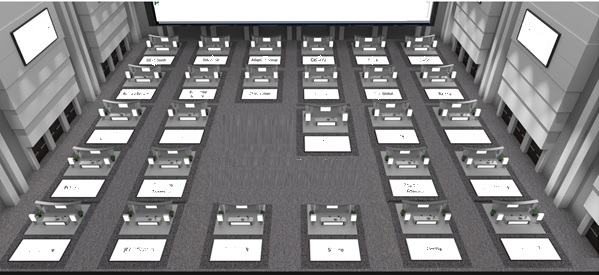
Because you’re running the event virtually, you don’t need a rent soul-less exhibition hall, so why re-create one?
Here are two examples of virtual exhibition halls I’ve entered in the last few months. I’ve blurred the names on the one I’m shaming – but I haven’t changed the colors. It was really that grey.
On the other hand, the SAP Concur Travel Industry Summit created a colorful graphic that broke down their exhibitors into categories. More like online shopping, you could quickly navigate to the vendors that would be most useful to you.

Run shorter sessions
Long-form online content is fine when people are getting EXACTLY what they signed up for. People listen to hour-long podcasts, read long articles, and listen to hour long webinars when it’s giving them exactly what they wanted to learn about.
GoToWebinar tracks average webinar attendance. And on average, people listen to 70% of a 60 minute webinar. That’s an average, so many people still tune in to most or all of it.
But at a conference, when you have a more diverse audience, and people who may have different interest and priorities, the sessions have to be shorter. Aim for 15-20 minute sessions. It’s short – but it makes presenters cut out all the fat, and get to the good stuff, and you won’t lose people who maybe only care about the next session. At a physical event, it’s rude to get up and walk out of a session, but there’s nothing stopping someone tuning in virtually from closing a window and walking away.
While politeness might keep someone from walking away showing you a product in a story, people will very quickly turn off a virtual product demo if they want to.
Limit panel discussions. What’s wrong with panel discussions? “That’s a great question, thank you, and firstly I’d like to re-iterate what the previous panelists have said…” I’ve heard this sentence more times than I’d like to. In an effort to make everyone feel included and have their fair share of time, panel discussions can quickly get dry. The exception is when you have a topic people are passionate about and have differing opinions.
Virtual panels should really only be on topics where people are genuinely passionate about a subject and will bring their unique perspective.
Get the right balance of Live vs Pre-recorded
Live is generally better for engagement. We’ve all seen too many awkward live streams where video or audio cuts out or is unintelligible. Rehearsals can reduce the risk of this, but not completely.
Pre-recorded is generally better for reliability. You can guarantee that pre-recorded sessions will look and sound good. You can edit them to your desired length. To save time in editing, try to keep strict on time when recording. It’s tepting to let the conversation flow, but it can be a nightmare editing 45 mintues into a 20 mintue slot.
But the real best-case scenario will probably be a mixture of both.
Webinar tools today mean you can generally stream pre-recorded webinars and make it as if it were live.
You can play the pre-recorded session, but have the speaker tune in for Q&A (Best if they can come on again in the same room, wearing the same shirt and in similar lighting)
Make your agendas crystal clear.
In person events always have a little bit of wiggle room, and the conference chair can use their discression to make amends. As everyone is in the same building, you can corral people to where you want them to go. You don’t have this advantage with online events.
Agendas need to be extremely clear exactly when a session is starting, and they must start on time. Titles need to be very clear what the session will cover and ideally, what the attendee will learn. Coach your speakers to have titles that will bring people to their session.
Build an on-demand strategy. Don’t have the on-demand section of your website as an afterthought. Let people know when videos will be available, to whom and for how long. What will your video library look like? Will it be open to everyone or just attendees? Will you gate keep the videos? How will you market them after the event. How can you re-use this helpful content? Start to answer these questions before your event, not after.
Conclusion
The biggest mistake companies make is just trying to re-launch their physical events online. The risk of doing this is having sessions that are either poorly attended or have high-drop out rates. Event sponsors and delegates will walk away and look for competing events to participate in next time.
 Redstart Marketing